Home Workout Equipment for Seniors: Safe, Simple Picks That Are Worth It
This article contains affiliate links. As an Amazon Associate, we earn from qualifying purchases, at no extra cost to you. Learn more.
The best home workout equipment for seniors is light, stable and easy to use from a chair or at a counter. A pair of light dumbbells, resistance bands with handles, a seated pedal or under-desk elliptical, and a grip strengthener cover strength, cardio and hand strength. Add a sturdy chair and a kitchen counter for balance work, and you can meet CDC guidance without a gym.
| Equipment | What it trains | Good starting point | Space needed |
|---|---|---|---|
| Light dumbbells | Arms, shoulders, legs | 1 to 5 pound pairs | A shelf or basket |
| Bands with handles | Back, chest, arms, legs | Lightest band first | A drawer |
| Pedal exerciser or under-desk elliptical | Low-impact cardio | 5 to 10 minutes at a time | Under a chair or desk |
| Grip strengthener | Hands and forearms | Lowest resistance setting | A pocket |
| Sturdy chair and counter | Balance, sit-to-stands | Already in your home | None |
What exercise do older adults need each week?
The CDC recommends three kinds of activity for adults 65 and older:
- Aerobic: at least 150 minutes a week of moderate activity, such as 30 minutes on 5 days.
- Muscle strengthening: at least 2 days a week, working legs, hips, back, abdomen, chest, shoulders and arms.
- Balance: activities such as heel-to-toe walking and standing up from a chair.
These recommendations make sense for women in their 50s too. Strength matters most of all with age. Sarcopenia, the age-related loss of muscle, is linked to falls, fractures and loss of independence. Progressive resistance training improves strength and walking speed in older adults.
Mayo Clinic adds that strength training can improve balance, lower the risk of falls and protect bone health. That is why most of the equipment below is for strength.
Which equipment gives you the most value?
Light dumbbells
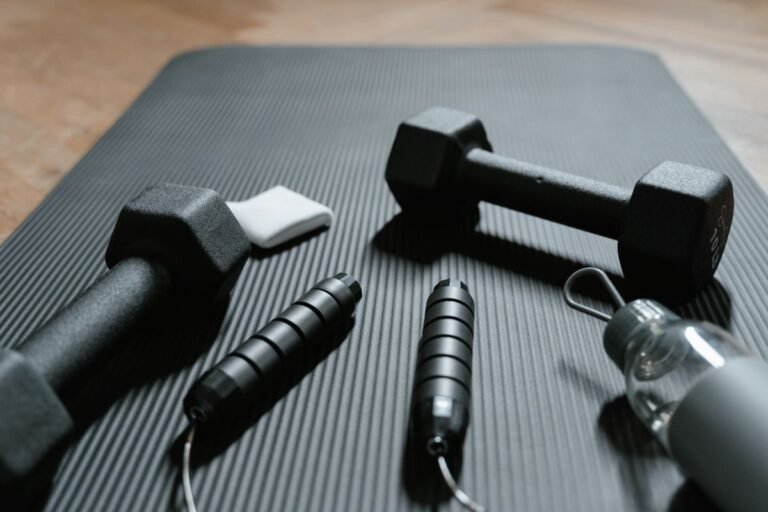
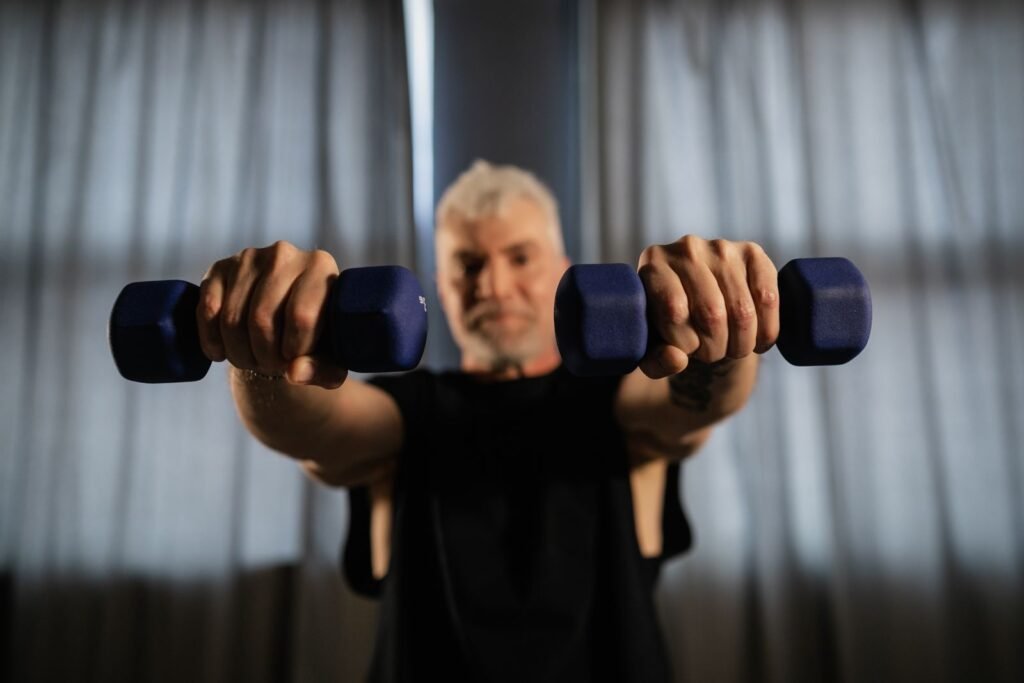
Dumbbells are simple and versatile. You can do seated shoulder presses, bicep curls, front raises and goblet sit-to-stands. Choose neoprene or vinyl coated ones, which are easier to grip and gentler on floors. Start with two or three pairs, such as 2, 3 and 5 pounds.
Resistance bands with handles
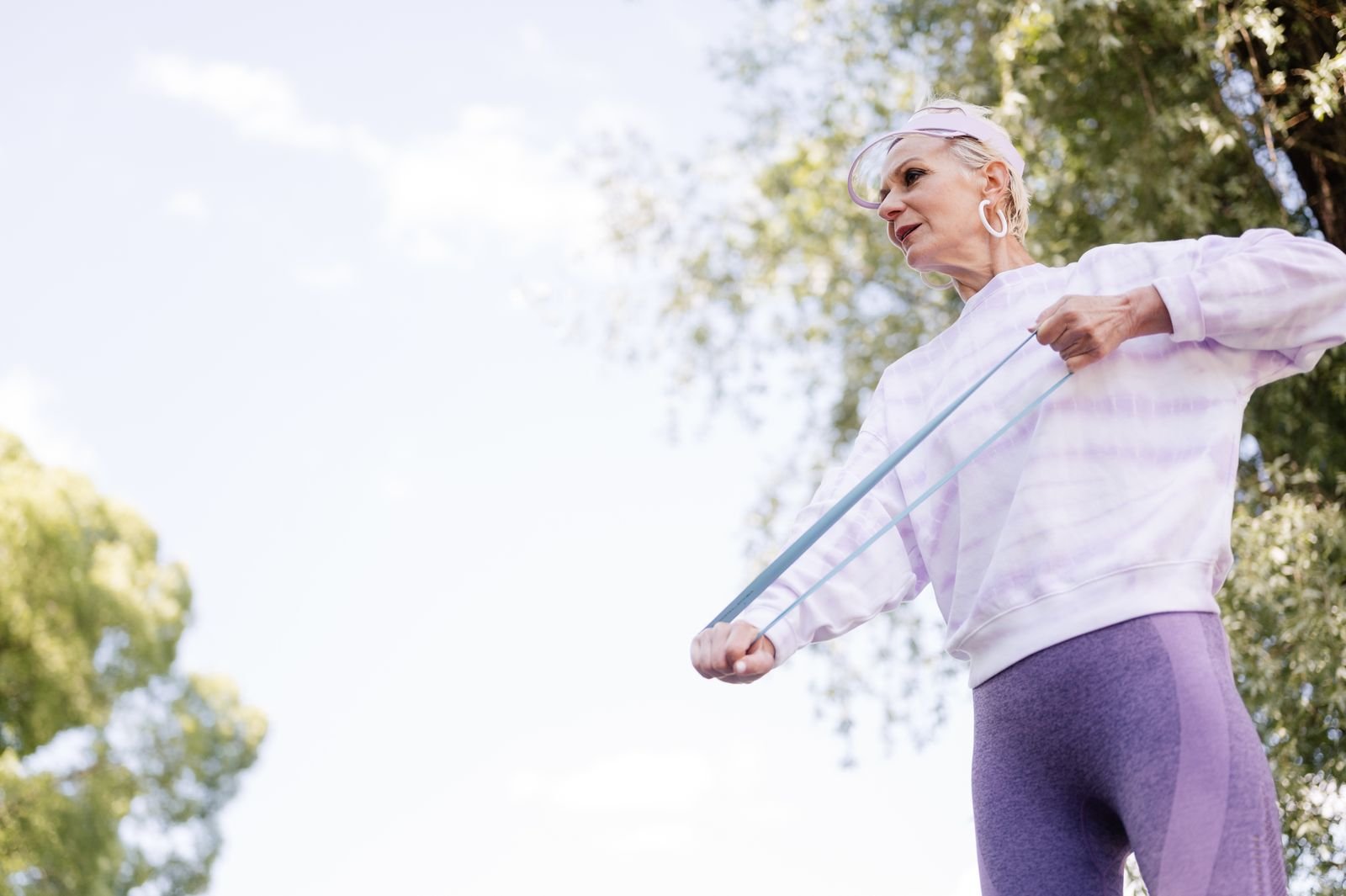
Bands give smooth resistance that builds gradually through each move, which many people find kind to their joints. A door anchor lets you do rows and chest presses, which are hard to replicate with dumbbells at home. Bands are light, cheap to store and safe to drop. Our resistance band workout for women over 50 gives you a full routine.
Pedal exerciser or under-desk elliptical
Seated pedaling is low-impact cardio with almost no fall risk. You can use it while watching television or reading. Ten minutes several times a day adds up toward the CDC’s 150 minutes. If you are deciding between options, see walking pad or under-desk bike.
Grip strengthener
Grip strength affects everyday tasks such as opening jars, carrying groceries and holding a railing. The World Health Organization uses grip strength as an indicator of vitality in aging populations, and it can predict decline in function in old age. Squeeze in sets of 10 while watching television. Also open your fingers against a rubber band, so the muscles that open the hand get work too.
A sturdy chair and your kitchen counter
These cost nothing and may be the most important items of all. The NHS strength routine uses a solid chair with no wheels for sit-to-stands and support during mini squats and calf raises. A counter is the safest support for balance practice.
What weight or resistance should you start with?
Lighter than you think. Mayo Clinic suggests a weight that tires your muscles after about 12 to 15 repetitions. One set of each exercise is enough to see benefits at first.
- Too light: you could easily do 25 reps. Move up.
- About right: the last 2 or 3 reps feel challenging, but your form stays clean.
- Too heavy: you swing, shrug, hold your breath or cannot reach 10 reps.
Move up in small steps, such as from 3 to 5 pounds, when 15 reps feel easy for two sessions in a row. Leave at least one full day between strength sessions for the same muscles, as Mayo Clinic advises.
What does a simple weekly routine look like?
| Day | What to do | Equipment |
|---|---|---|
| Monday | 20-minute strength session | Dumbbells, bands, chair |
| Tuesday | Walk or pedal 20 to 30 minutes, plus balance practice | Pedal exerciser, counter |
| Wednesday | Light day: grip work and stretching | Grip strengthener |
| Thursday | 20-minute strength session | Dumbbells, bands, chair |
| Friday | Walk or pedal, plus balance practice | Pedal exerciser, counter |
| Weekend | A longer walk, gardening or a swim | None |
A sample 20-minute strength session
- Sit-to-stand from a chair: 10 to 12 reps
- Seated band row with the door anchor: 12 to 15 reps
- Seated dumbbell shoulder press: 10 to 12 reps
- Standing calf raises holding the counter: 12 to 15 reps
- Bicep curls: 10 to 12 reps
- Band chest press: 10 to 12 reps
Rest 60 seconds between exercises and do 2 rounds. For a fully guided version, try the 20-minute chair workout or the beginner strength plan.
What does this look like in practice?
One woman might be 68, recently retired and nervous about joining a gym after a fall last winter. She buys 3 and 5 pound dumbbells, a band set and a pedal exerciser, and keeps them in a basket by her armchair. She pedals during the morning news and does strength sessions on Monday and Thursday. After a few months, carrying groceries up the steps in one trip feels easier. That is the kind of everyday change steady practice aims for.
What equipment should seniors skip or use with care?
- Stability balls for sitting: they roll easily. Use them only with good balance and someone nearby.
- Heavy kettlebells and barbells: skip these without coaching. Swinging moves need good technique.
- Full-size treadmills: if balance is a concern, walking outdoors or in a mall may be safer. Always use the safety clip.
- Thin, slippery mats on hard floors: use a non-slip mat or carpet.
- Toning gadgets that promise spot reduction: they do not replace strength training.
How do you set up a safe home workout space?
- Clear a space about the size of a yoga mat, free of rugs and cords.
- Push your chair against a wall so it cannot slide.
- Store weights low, on a shelf or in a basket, so you never lift them from overhead.
- Work in good light and wear supportive shoes rather than socks.
- Keep water and a phone within reach.
Check with your doctor before starting if you have heart disease, uncontrolled blood pressure, osteoporosis with fractures or recent falls. Mayo Clinic also advises getting medical approval first if you have a serious balance problem. Then add balance practice next to your counter, as described in how to improve balance after 50.
Want to see a seated resistance band workout?
Alyssa Kuhn of Arthritis Adventure demonstrates a seated, low-impact resistance band routine you can do from the couch.
What are our top home workout picks for seniors?
These four cover the strength, cardio and grip work above with very little space or risk. Our picks:
- CAP Neoprene Dumbbell Pairs: Light, grippy, color-coded dumbbells in small pairs, suited to seated and standing beginner moves. Check price on Amazon
- WHATAFIT Resistance Bands with Handles: Stackable tube bands with handles and a door anchor for rows, presses and curls at home. Check price on Amazon
- Cubii JR1 Under-Desk Elliptical: A quiet seated elliptical for low-impact cardio while you read or watch television. Check price on Amazon
- FitBeast Hand Grip Strengthener: Adjustable resistance for building grip strength for jars, bags and railings. Check price on Amazon
Frequently asked questions
What is the best exercise equipment for seniors at home?
Light dumbbells, resistance bands with handles, a pedal exerciser and a sturdy chair cover most needs safely. Together they handle strength, cardio and balance practice.
What weight dumbbells should a senior woman start with?
Many women start with 1 to 5 pounds. Pick a weight you can lift 12 to 15 times with good form, with the last few reps feeling challenging.
Are pedal exercisers good for seniors?
Yes. They give low-impact cardio while seated, with very little fall risk. Short bouts through the day count toward your weekly aerobic goal.
Are resistance bands as good as weights?
For most home exercisers, yes. Bands build strength when you choose a challenging enough band and move up as you get stronger.
Do I need a treadmill?
No. Walking outdoors or indoors and seated pedaling cover aerobic activity for most people. A treadmill is optional, and caution is wise if your balance is shaky.
Sources and further reading
- Strength training: Get stronger, leaner, healthier, Mayo Clinic
- Balance exercises, Mayo Clinic
- Older Adult Activity: An Overview, Centers for Disease Control and Prevention
- Strength exercises, NHS
- Sarcopenia, Wikipedia
- Grip strength, Wikipedia
A quick note: this is general health and fitness information, not medical advice. Talk with your doctor before starting a new exercise program or changing any treatment.