The Best Low-Impact Workouts for Achy Joints
There is a special frustration in wanting to move your body and having your knees file a formal complaint about it. If your joints have gotten crankier in your late 40s and 50s, you are in enormous company, and you have not been benched. You just need workouts that respect what your joints are dealing with right now.
Low-impact exercise means at least one foot stays grounded or your body weight is supported, so joints absorb far less pounding than with running or jumping. That does not mean low effort. Done right, these workouts build real strength and can genuinely improve how joints feel over time.
Why do joints get achy in midlife?
A few things happen at once, and none of them mean anything is “wrong” with you.
First, hormonal shifts affect more than hot flashes. Estrogen helps keep tendons and ligaments supple and helps cartilage hold moisture, so as levels fluctuate and decline, many women notice stiffer mornings and achier knees.
Second, there is simple mileage. By your late 40s, your knees and hips have carried you through decades of life and maybe a few years of sitting more than you meant to. Cartilage gets a little less springy, and weaker stabilizing muscles put more load on the joints.
Third, weight changes matter mechanically. Even a modest gain means knees absorb extra pounds with every step, thousands of times daily. That is physics, not judgment.
The encouraging part: joints generally like gentle, regular movement. Motion circulates the fluid that nourishes cartilage, and stronger surrounding muscles act like shock absorbers.
Which low-impact workouts are best for achy joints?
1. Walking
Best for: Almost everything. Heart health, mood, bone density, and weight management, with no equipment beyond decent shoes.
Start safely: Begin with 15 to 20 minutes at a comfortable pace, three or four days a week. Add about five minutes weekly. Flat routes first, gentle hills later.
Modifications: Walk on tracks, grass, or dirt paths when knees are cranky. Replace walking shoes yearly. Poles take meaningful load off knees and hips on longer walks. (Related: Walking for Menopause Weight Loss: The 8,000-Step Reset)
2. Swimming and Water Aerobics
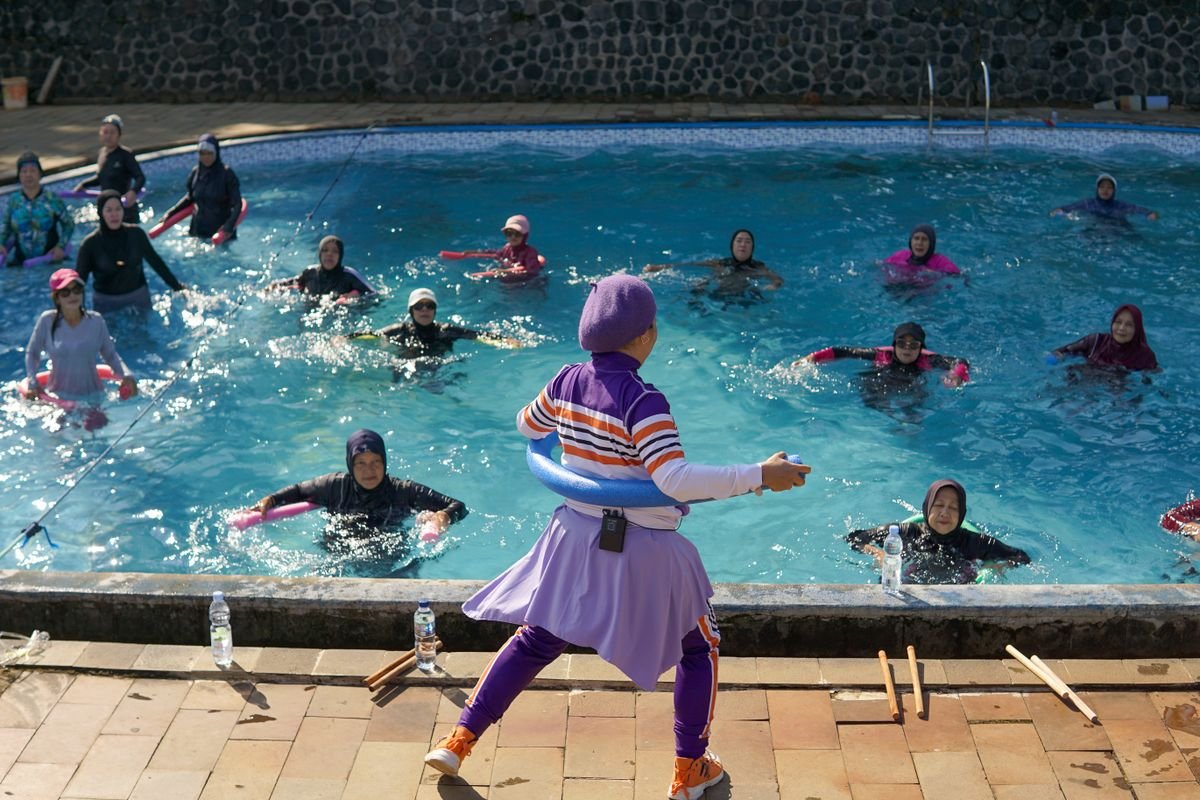
Best for: The crankiest joints. Water supports up to 90 percent of your body weight, so you get a full workout with almost no pounding.
Start safely: Try 20 to 30 minutes of easy laps or a beginner water aerobics class. If breaststroke bothers your knees, freestyle or backstroke may feel better.
Modifications: Use a noodle or kickboard for water walking in the deep end. Water shoes protect feet and add grip.
3. Cycling
Best for: Building leg strength without loading knees, plus excellent cardio. Great when knees hate stairs but tolerate smooth motion.
Start safely: Begin with 15 to 20 minutes at easy resistance. Set the seat high enough that your knee keeps a slight bend at the bottom of each stroke. Too low a seat is the top cause of achy cyclist knees.
Modifications: Recumbent bikes support your back and spread your weight, a favorite for sore knees. Keep resistance moderate rather than grinding heavy gears.
4. The Elliptical
Best for: Running-like cardio with zero impact. Your feet never leave the pedals.
Start safely: Begin with 10 to 15 minutes at low resistance. Skip the incline for the first few weeks, and use the moving handles lightly.
Modifications: Shorten your stride if knees or hips feel pinchy at full extension. Pedaling backward uses different muscles and rests overworked spots.
5. Rowing
Best for: Full-body strength and cardio in one smooth, seated motion. Works legs, back, core, and arms.
Start safely: Technique beats effort. Start with 10 easy minutes: push with legs first, lean back slightly, then pull the handle. Ask gym staff for a quick form tutorial. It is worth it.
Modifications: Keep resistance moderate. If knees protest the deep bend at the start of each stroke, shorten the slide.
6. Chair-Supported Strength Training
Best for: Building the muscle that protects joints, without getting up and down off the floor.
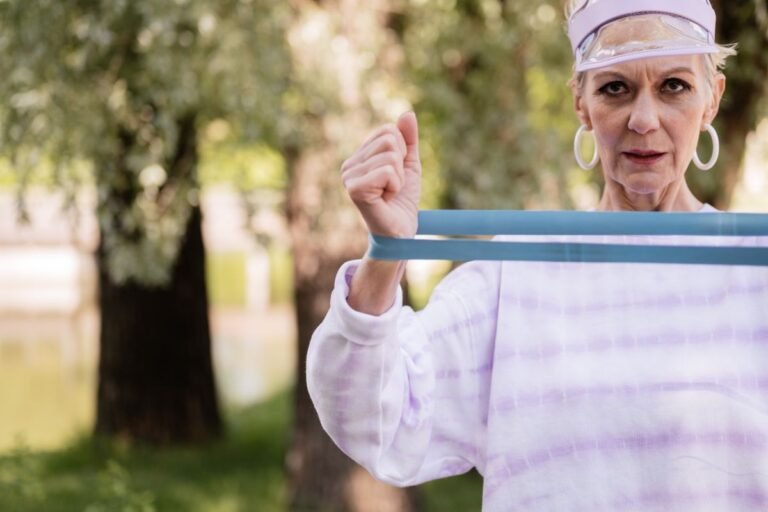
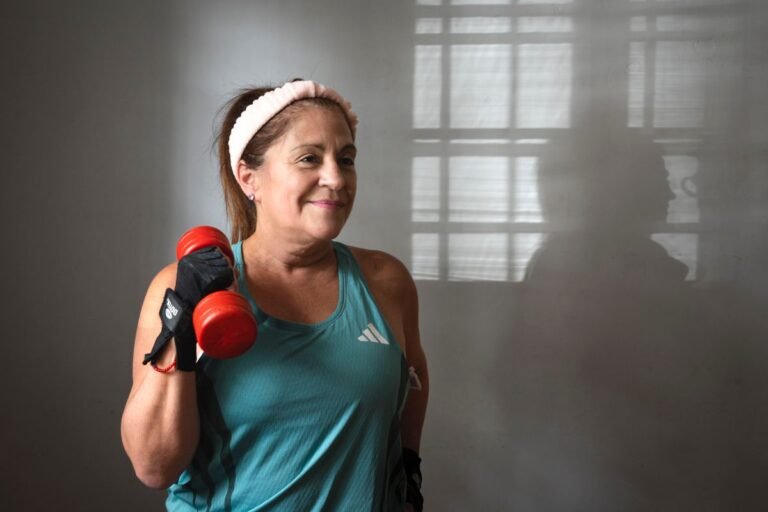
Start safely: Twice weekly, do a circuit of chair-assisted squats, standing leg lifts holding the chair, wall push-ups, seated band rows, and calf raises. One to two sets of 10 to 12 reps is plenty. (Related: Strength Training for Women Over 45: A Beginner Plan That Respects Your Joints)
Modifications: Reduce range of motion before dropping an exercise. A shallow pain-free squat beats a deep painful one. Bands let you fine-tune resistance.
What does a low-impact workout week look like?
Pick two or three modalities you enjoy and rotate them:
- Monday: 25-minute walk
- Tuesday: Chair strength circuit (20 minutes)
- Wednesday: Rest or gentle stretching
- Thursday: 20 minutes on the bike or elliptical
- Friday: Chair strength circuit (20 minutes)
- Saturday: 30-minute walk
- Sunday: Rest
About two and a half hours of movement with rest days built in. Lengthen sessions before adding days.
Rest or See a Professional?
Normal, keep going gently: Mild soreness a day or two after a new workout. Morning stiffness easing within 30 minutes of moving. A dull ache that stays the same or improves as you warm up.
Rest a few days: Pain noticeably worse during a workout than at the start. Soreness lasting past three days. A joint irritated by one specific exercise, your cue to modify or swap it.
See a professional: Sharp, stabbing, or catching pain. Swelling that does not settle in a couple of days. A knee that locks, buckles, or gives way. Pain steadily worsening over two weeks despite rest. Pain that wakes you at night. A physical therapist is an excellent first stop for joint issues.
Achy joints are a reason to choose workouts thoughtfully, not to stop moving. Many women find six weeks of consistent low-impact movement leaves their joints feeling better than they have in years.
Frequently asked questions
What counts as low-impact exercise?
Exercise where at least one foot stays on the ground or your body weight is supported, so your joints absorb far less pounding than with running or jumping.
Is walking good for knee pain?
For most people, yes. The CDC lists walking, biking, swimming, and water activities as good ways to ease arthritis pain. Softer surfaces and walking poles can take load off sore knees.
Is swimming good for achy joints?
Yes. Water supports most of your body weight, so you get a full workout with almost no impact. It is often the best option for the crankiest joints.
How do I know if joint pain means I should stop?
See a professional for sharp or catching pain, swelling that does not settle in a couple of days, a joint that locks or gives way, pain that worsens over two weeks, or pain that wakes you at night.
How much low-impact exercise should I aim for each week?
The sample week adds up to about two and a half hours, which matches the CDC recommendation of 150 minutes of moderate activity a week.
Sources and further reading
- Exercise to Ease Arthritis Pain, Centers for Disease Control and Prevention
- Adult Activity: An Overview, Centers for Disease Control and Prevention
A quick note: this is general wellness information, not medical advice. If you have a health condition, take medication, or are starting a new exercise or eating routine, check in with your doctor first.