
How Often Should You Do Kegels? A Pelvic Floor Plan for Women Over 45
This article contains affiliate links. As an Amazon Associate, we earn from qualifying purchases, at no extra cost to you. Learn more.
Most pelvic floor programs used in research have women do about 8 to 12 strong squeezes, held for up to 10 seconds, three times a day, plus some quick squeezes, every day for at least three months. Many women notice less leaking within 6 to 12 weeks, but full benefit takes three to six months of steady practice. Doing them correctly matters more than doing more, so if you are unsure, a pelvic floor physical therapist is the fastest way to real results.
| Part of the routine | How to do it | How often |
|---|---|---|
| Slow holds | Squeeze and lift, hold up to 10 seconds, fully relax for 10 seconds | 8 to 12 reps, 3 times a day |
| Quick flicks | Squeeze hard for 1 second, relax | 10 reps after each set of holds |
| The “knack” | Squeeze just before you cough, sneeze, laugh or lift | Every time, once learned |
| Progression | Move from lying, to sitting, to standing, to during movement | Every few weeks |
Why does the pelvic floor weaken after 45?
The pelvic floor is a hammock of muscles that supports your bladder, uterus and bowel and helps keep you continent. Several things weaken it in midlife:
- Lower estrogen thins and dries the tissues of the vagina and urethra and reduces their support.
- Past pregnancies and vaginal births stretch and sometimes injure these muscles.
- Muscle loss with age affects the pelvic floor like other muscles.
- Extra belly weight, chronic coughing and constipation put repeated pressure on it.
The result can be stress incontinence, leaking when you cough, sneeze, laugh, jump or lift. Many women also have urgency, a sudden strong need to go. Pelvic floor training helps both. If leaking is stopping you from exercising, read why you leak when you exercise.
Do Kegels actually work?
Yes, with good evidence. A Cochrane review of 31 trials found that women with stress urinary incontinence who did supervised pelvic floor muscle training were about eight times more likely to report being cured than women who did no training. Major guidelines, including those from the American College of Physicians, recommend pelvic floor training as first-line treatment for stress incontinence.
The catch: studies show that up to about one-third of women do the exercise incorrectly when given only verbal instructions, for example by bearing down instead of lifting, or squeezing their buttocks instead. Supervised programs work better than a printed handout.

How do you do a Kegel correctly?
- Find the muscles. Imagine stopping the flow of urine and holding in gas at the same time. You should feel a squeeze and an upward lift inside. (Do not practice by actually stopping urine regularly; that can interfere with emptying.)
- Start lying down with knees bent. It is easier when the muscles are not working against gravity.
- Keep everything else relaxed. Your belly, buttocks and thighs should stay soft. Breathe normally.
- Squeeze and lift, hold as long as you can up to 10 seconds, then fully relax for the same amount of time. Relaxing is half the exercise.
- Add quick flicks: 10 fast, strong squeezes with full release.
How do you know you are doing it right?
- Look with a hand mirror: the area between the vagina and anus should draw up and in, not bulge out.
- Place a clean finger just inside the vagina; you should feel a gentle squeeze and lift.
- A pelvic floor physical therapist can check internally or with biofeedback, which is the most reliable way.
How long until you see results?
| Time | What many women notice |
|---|---|
| 2 to 4 weeks | Better awareness and control of the muscles |
| 6 to 12 weeks | Less leaking with coughs and sneezes |
| 3 to 6 months | Fuller strength and endurance; most trials measure results here |
| Ongoing | Maintenance sets a few times a week keep the gains |
What could a real 12-week plan look like?
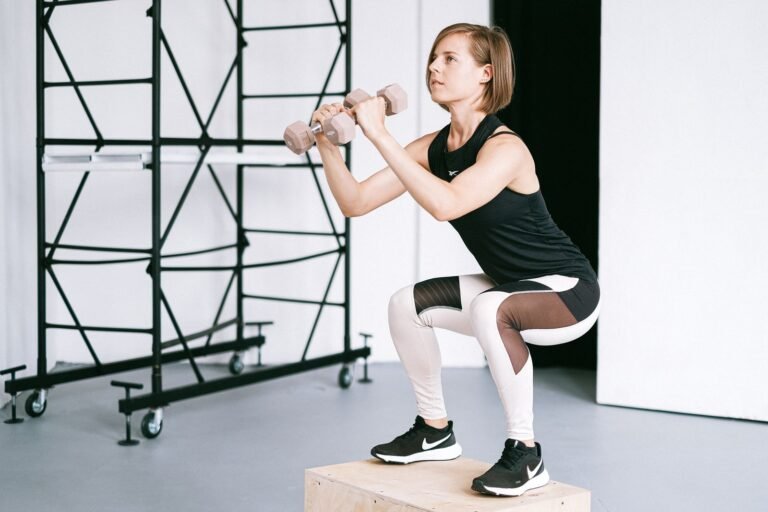
Weeks 1 to 4: three daily sets lying down, holding as long as possible up to 10 seconds, plus quick flicks, linked to habits like brushing teeth and making coffee. Weeks 5 to 8: two sets sitting, one standing, and start using the knack before sneezes. Weeks 9 to 12: practice during squats and lifting groceries. A 52-year-old who follows this plan finds she no longer leaks when she sneezes and only occasionally when she jumps.
What else strengthens the pelvic floor after 45?
- Full-body strength training with good breathing. Exhale on effort to avoid bearing down. See our beginner strength plan.
- Manage constipation with fiber, fluids and not straining.
- Healthy weight. Losing even 5 to 10 percent of body weight reduces incontinence in women with overweight.
- Treat a chronic cough and stop smoking.
- Vaginal estrogen can improve tissue health and urgency symptoms. Ask your doctor.
- Pessaries, small devices fitted by a clinician, can support the bladder during exercise.
When should you see a doctor or pelvic floor therapist?
- Leaking that limits exercise, work or social life
- No improvement after three months of regular practice
- A heavy, dragging feeling or bulge in the vagina (possible prolapse)
- Pain with Kegels, sex or urination
- Blood in urine, frequent UTIs or trouble emptying your bladder
Some women have a pelvic floor that is too tight, not too weak. For them, Kegels can make pain or urgency worse, and relaxation training is needed. A therapist can tell the difference.
How do you do Kegels in different positions?
Physiotherapist Michelle Kenway demonstrates four positions for pelvic floor exercises, a helpful way to check your technique.
What can help you train your pelvic floor?
These support the plan above: learning the right squeeze, staying consistent and managing leaks meanwhile. Our picks:
- Kegel Biofeedback Trainer: App-connected devices show whether you are squeezing correctly, a big help if you are unsure. Ask your doctor first if you have pain or prolapse. Check price on Amazon
- Pelvic Floor Exercise Guide: A step-by-step book from a pelvic health physical therapist if you cannot see one in person. Check price on Amazon
- Leakproof Underwear: Reusable protection so you can keep exercising while your pelvic floor gets stronger. Check price on Amazon
- Owala FreeSip Insulated Water Bottle: Cutting fluids makes urine more concentrated and can irritate the bladder; steady sipping is better. Check price on Amazon
Frequently asked questions
Can you do too many Kegels?
Yes. Overdoing them, or never fully relaxing, can lead to muscle fatigue, tightness and pain. Stick to a structured routine and focus on full relaxation between squeezes.
Are Kegels enough for prolapse?
Pelvic floor training can reduce prolapse symptoms and may stop mild prolapse from getting worse. Moderate or severe prolapse may need a pessary or surgery.
Do Kegel weights or balls work?
Vaginal weights can help some women but are not better than well-done exercises alone. Start with correct technique, ideally checked by a therapist.
Is it too late to strengthen the pelvic floor after menopause?
No. Pelvic floor muscles respond to training at any age, and trials include women well into their 70s.
Sources and further reading
- Pelvic floor muscle training versus no treatment for urinary incontinence in women, Cochrane Library
- Bladder Control Problems in Women, NIDDK
- Urinary Incontinence, American College of Obstetricians and Gynecologists
- Kegel exercises: self-care, MedlinePlus
A quick note: this is general health information, not medical advice. Talk with your doctor before starting, stopping, or changing any treatment.



One Comment