Walking for Menopause Weight Loss: The 8,000-Step Reset
Walking is the most underrated exercise for women in midlife. No gym, no special skill, no recovery days. It does not spike your appetite the way hard cardio sometimes does, and research suggests it reliably keeps daily energy expenditure up during the menopause transition.
This is a practical reset: why walking works at this stage, what the 8,000-step target means, a four-week ramp-up plan, and concrete ways to hit your steps.
Why does walking work so well during menopause?
During perimenopause and menopause, your body is dealing with hormonal shifts, often disrupted sleep, and plenty of life stress. Intense exercise can be great, but it adds another demand on an already taxed system, and it can leave you ravenous afterward.
Walking sits in a sweet spot. It is moderate activity that:
- Burns meaningful energy without stressing the body. A brisk walk raises your heart rate without the cortisol spike intense training can cause.
- Does not trigger rebound hunger. Many women find they can walk for an hour and eat normally afterward, while a hard run leaves them starving.
- Improves insulin sensitivity. Walking helps your muscles use blood sugar more efficiently, which matters when your body seems to handle carbs differently than it used to.
- Supports sleep and mood. Daylight walks seem to help sleep quality, and rhythmic movement is genuinely calming.
- Is joint friendly. Unlike running, walking is low impact, which matters when knees or hips already voice opinions. (Related: The Best Low-Impact Workouts for Achy Joints)
Walking is not the only exercise you need, but if you are starting from zero, it is the foundation everything else builds on.
Why aim for 8,000 steps instead of 10,000?
You have probably heard 10,000 steps. That number came from a 1960s Japanese marketing campaign, not from science. A 2022 analysis of 15 studies in The Lancet Public Health found that the drop in mortality risk leveled off at about 6,000 to 8,000 steps a day for adults 60 and older, and about 8,000 to 10,000 for younger adults.
For most women, 8,000 steps is roughly 60 to 80 minutes of total movement across the day, about 3.5 to 4 miles depending on stride length. It does not have to happen in one walk. Steps scattered through the day count exactly the same as steps done in one session.
Think of 8,000 as a target to build toward, not a pass-or-fail line. The biggest gains come from leaving the very-low-activity zone.
How do you build up to 8,000 steps?
Do not jump straight to 8,000 if you are currently at 3,000. That is how people get sore, discouraged, and done by day five. Add roughly 1,000 steps per week instead.
First, find your baseline. Wear a pedometer, fitness tracker, or phone step counter for three normal days and average the result.
- Week 1: Baseline plus 1,000. One intentional 15-minute walk, morning or evening.
- Week 2: Baseline plus 2,000. A second short walk, or extend the first to 25 minutes.
- Week 3: Baseline plus 3,000. Add movement snacks: a 10-minute walk after lunch, parking farther away, a lap around the block while dinner cooks.
- Week 4: Aim for 7,000 to 8,000. A main walk plus scattered steps, and the number climbs naturally.
If you miss a day, pick up the schedule the next day. Do not try to “make up” steps with a punishing weekend march. Consistency across weeks is what changes your body, not any single heroic day.
10 Concrete Ways to Fit Steps Into a Busy Day
The women who hit 8,000 steps are rarely the ones with the most free time. They weave walking into an already full day.
- Walk after meals. Ten to fifteen minutes after lunch and dinner adds 2,000 to 3,000 steps and seems to help with blood sugar and digestion.
- Take phone calls on foot. Every call becomes a walking call. Pace the house, yard, or hallway.
- Park at the far end of every lot. Those extra 200 steps happen several times a day.
- Walk while something heats up. Microwave running or coffee brewing: do laps instead of standing still.
- Take the long route. Bathroom on the other floor, one extra block on the way home.
- Walk during practice. At your kid’s or grandkid’s practice, circle the field instead of sitting in the car.
- Make one errand a walking errand. If the pharmacy or mailbox is within 15 minutes on foot, walk it.
- Move hourly. Five minutes of walking each hour across an eight-hour day is 40 minutes you barely notice.
- Walk with a friend or your dog. Social walks get done because someone else is counting on you.
- End the day with a wind-down walk. Ten slow minutes after dinner aids digestion and pads your count before bed.
How fast should you walk?
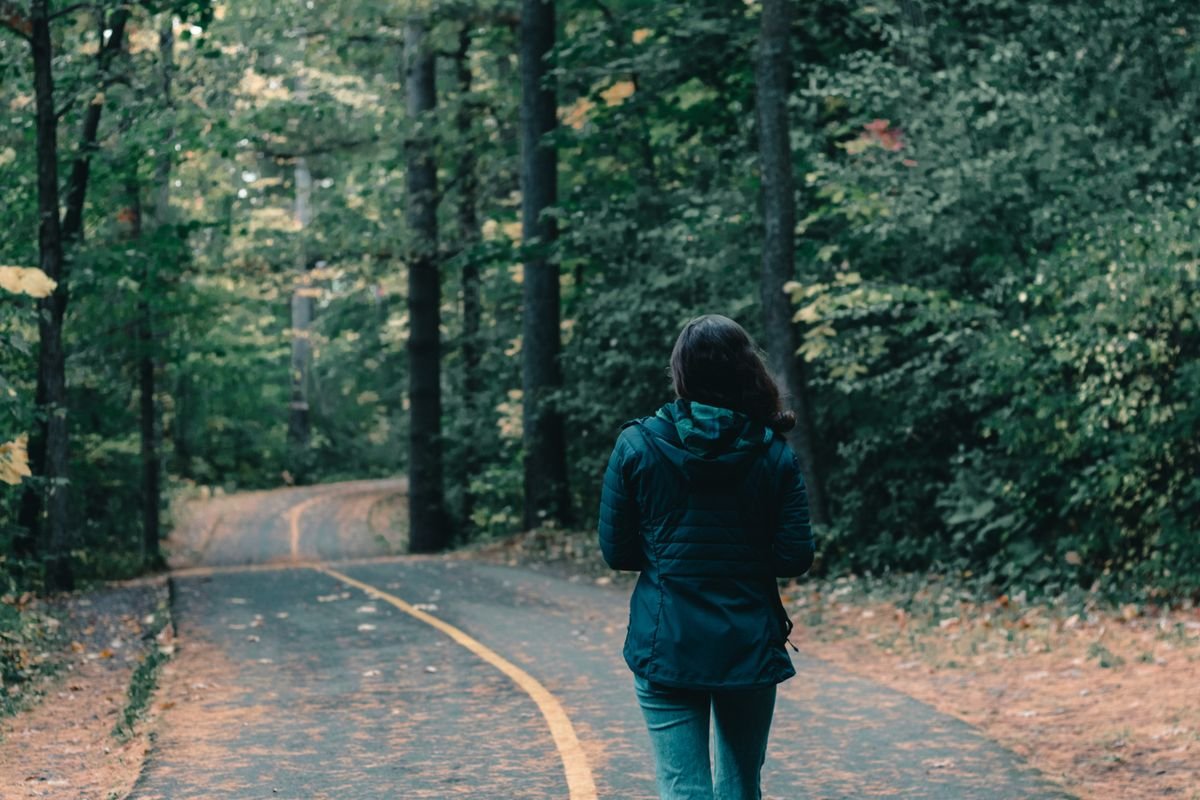
For general health and weight management, aim for a brisk pace most of the time. Simple test: you should be able to talk, but singing would be difficult. If you can chat effortlessly, pick up the pace. If you are gasping, slow down.
A useful pattern: one dedicated brisk walk per day (20 to 40 minutes), with everything else at a comfortable pace. Casual steps still count. Hills are a free upgrade: routing your main walk over any available incline adds effort without adding time.
What should you track, and what should you ignore?
Track these:
- Daily steps. Watch the weekly average trend, not any single day.
- How your clothes fit. More useful than the scale for the first month.
- Energy and sleep. Many women notice better sleep and steadier afternoon energy within two to three weeks.
Ignore these (for now):
- Calories burned on your tracker. The estimates are rough. Do not eat back your walked calories.
- Day-to-day scale weight. Water, hormones, and digestion move the scale by pounds daily. Weigh weekly at most.
- Speed records. This is not a race. A slow walk you do beats a fast walk you skip.
How do you make it stick after week 4?
Keep walking shoes by the door you actually use, pick a default route so you never have to decide where to go, and keep a bad-weather backup like laps around the house or marching in place during a show. Revisit your target monthly. Once 8,000 feels easy, hold there happily or nudge higher.
Walking will not transform your body in a month. What it will do is rebuild your relationship with daily movement and give every other habit a foundation to stand on. That is what a reset is for. (Related: Setting Realistic Fitness Goals for Your Late 40s and 50s)
Frequently asked questions
Is walking 8,000 steps a day enough to lose weight during menopause?
Walking raises your daily energy use and supports sleep and blood sugar, but it works best alongside strength training and enough protein. Think of it as the foundation, not the whole plan.
How long does it take to walk 8,000 steps?
For most women it is roughly 60 to 80 minutes of total movement, or about 3.5 to 4 miles, spread across the whole day.
Do my steps have to happen in one walk?
No. Steps scattered through the day count exactly the same as steps done in one session.
Where did the 10,000-step goal come from?
It started as a 1960s Japanese pedometer marketing slogan, not a research finding.
What pace counts as brisk walking?
Use the talk test: you should be able to talk, but singing would be difficult. If you can chat easily, speed up. If you are gasping, slow down.
Sources and further reading
- Daily steps and all-cause mortality: a meta-analysis of 15 international cohorts, The Lancet Public Health, 2022
- Adult Activity: An Overview, Centers for Disease Control and Prevention
A quick note: this is general wellness information, not medical advice. If you have a health condition, take medication, or are starting a new exercise or eating routine, check in with your doctor first.