Bone Health After 45: The Exercises That Protect You
Here is something nobody mentions at the 45th birthday party: your bones are quietly changing. Bone is living tissue, constantly broken down and rebuilt. After menopause, the balance tips toward breakdown, and density gradually declines.
The good news: exercise is one of the most effective tools for supporting your bones, and it works at any age. Bone responds to the demands placed on it. Load it thoughtfully and regularly, and it gets the message to stay strong.
Why does bone density decline after menopause?
In plain language: estrogen helped put the brakes on bone breakdown. Your skeleton is always remodeling, with some cells dissolving old bone and others building new bone to replace it. Estrogen kept the breakdown side from outpacing the build-up side.
When estrogen drops during perimenopause and menopause, that restraint loosens, and density declines faster than before. Research suggests the most rapid loss happens in the first few years after menopause, then continues more slowly.
More context: you built most lifetime bone mass in your 20s and 30s. Women generally start with smaller skeletons than men, so there is less margin. That is exactly why the habits below matter: exercise and nutrition are the levers you can control.
None of this is destiny. Studies indicate the right kinds of exercise can slow bone loss and, in some cases, modestly improve density at key sites.
Which types of exercise support bone health?
Bone strengthens in response to impact and load, a principle scientists call Wolff’s law, which is really just “use it or lose it” for skeletons. Two kinds of exercise deliver that signal.
Weight-bearing exercise means activity done on your feet, with bones supporting body weight against gravity. Walking, dancing, hiking, stair climbing, and tennis all count. Swimming and cycling, wonderful for hearts and joints, do not count here, because the water or bike carries your weight instead of your bones.
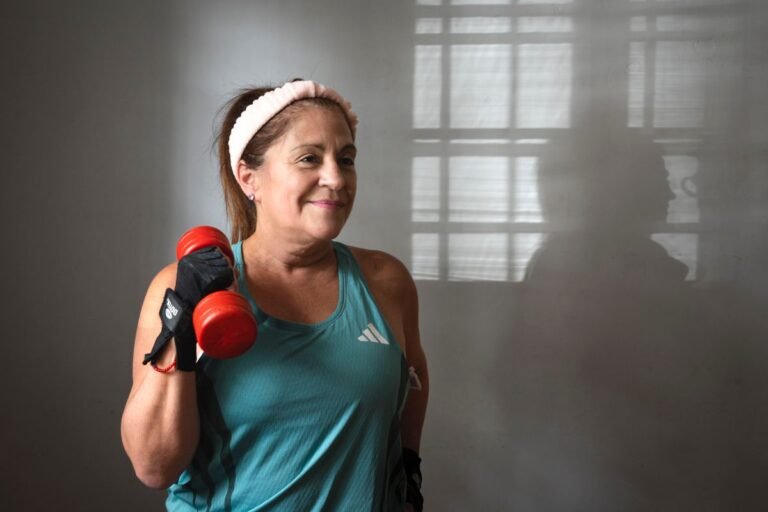
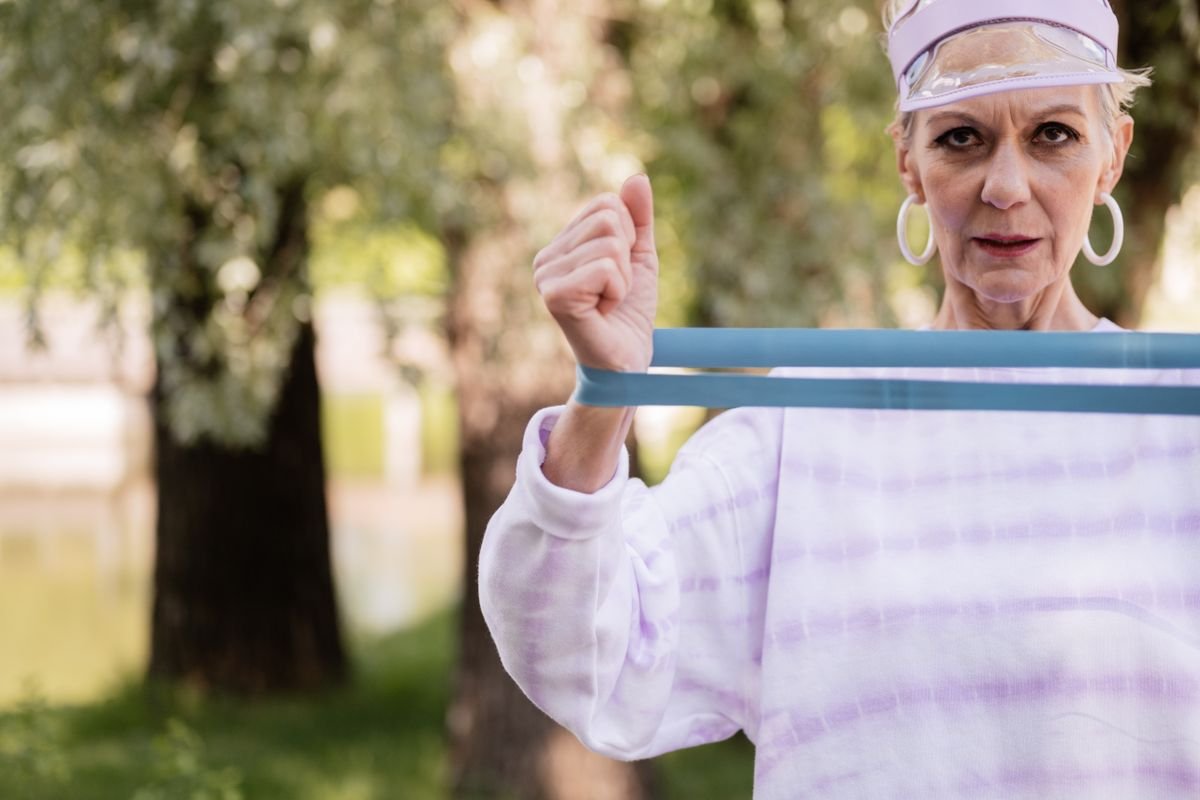
Resistance exercise means muscles working against something: dumbbells, bands, bodyweight, or machines. When muscles tug on bone during a lift, the bone reinforces itself at exactly the stressed spots. This is the most targeted way to strengthen specific areas.
The best strategy combines both: regular weight-bearing movement plus resistance training twice a week. If that sounds like a lot, walking already covers the first half for most women.
Which exercises protect the hips, spine, and wrists?
Fractures in later life most often happen at the hip, spine, and wrist. These exercises target those areas. Start light and focus on form.
Hips: The highest-stakes site, so give it priority. Squats (bodyweight or light dumbbells), step-ups onto a sturdy step, and side-lying or standing leg lifts load hip bones directly. Keep lunges shallow at first if knees complain.
Spine: Bent-over rows with dumbbells or a band, bird dogs (on hands and knees, extending opposite arm and leg), and gentle back extensions strengthen the muscles bracing your vertebrae. Posture matters more than heavy weight. Skip loaded forward bending with a rounded back.
Wrists: Wrists usually break catching yourself in a fall. Wrist curls with a light dumbbell, modified push-ups from the knees, and carrying heavy grocery bags all load wrist bones. Squeezing a tennis ball builds useful grip strength too.
(Related: Strength Training for Women Over 45: A Beginner Plan That Respects Your Joints)
A 20-Minute Bone-Support Routine, Twice a Week
Do this two days a week with at least one rest day between. You need light to medium dumbbells, a sturdy chair, and a step or low bench.
Warm-up (3 minutes): March in place one minute, 10 arm circles each direction, then 10 gentle bodyweight squats.
The circuit (14 minutes): Do each exercise, rest 30 to 60 seconds between, and repeat the circuit twice.
- Goblet squats, dumbbell at chest: 10 reps (hips, spine)
- Bent-over dumbbell rows: 10 reps per arm (spine, wrists)
- Step-ups, alternating legs: 8 per leg (hips)
- Wall or knee push-ups: 8 to 10 reps (wrists, spine support)
- Standing calf raises holding the chair: 12 reps (lower-leg bones)
- Bird dogs: 8 per side, brief hold each (spine stability)
Cool-down (3 minutes): Gentle stretches for legs, back, and shoulders while your heart rate settles.
When every rep feels easy two sessions in a row, nudge the weight up or add a third round. Gradual progression is the whole secret.
Which balance exercises help prevent falls?
Strong bones matter less if you fall on them. Most fractures happen because of a fall, not because a bone spontaneously gave out. Five minutes of balance work a few times weekly is cheap insurance. Stay near a wall or sturdy chair.
- Heel-to-toe walk: Walk a straight line placing one foot directly in front of the other. Ten steps, turn, repeat.
- Single-leg stand: Stand on one leg 20 to 30 seconds, then switch. When easy, try a few seconds with eyes closed.
- Weight shifts: Feet hip-width apart, slowly shift weight side to side, then forward and back, feeling the edges of balance.
If you have had falls or feel unsteady, mention it to your doctor or a physical therapist before progressing.
What everyday habits support your bones?
Take the stairs. Carry groceries instead of wheeling everything. Garden, which packs squatting, lifting, digging, and carrying into one hobby. Dance in the kitchen. Park farther away. None of these replace your twice-weekly routine, but they add dozens of small loading moments across the week, and small moments compound. (Related: Home Workout Gear Actually Worth Buying)
What nutrients matter for bone health?
Bones are built from nutrients, so the eating side matters. This is general information, not a prescription.
Calcium is the headline mineral. Good everyday sources: dairy, fortified plant milks, canned salmon or sardines with bones, calcium-set tofu, almonds, and leafy greens like kale and bok choy.
Vitamin D helps your body absorb calcium. Sunlight is the main natural source, and many women run low in winter. Fatty fish, egg yolks, and fortified foods add smaller amounts. Since deficiency is common and testing is simple, ask your doctor whether a supplement makes sense for you.
Protein matters for bone more than most realize. Bone is about half protein by volume, and the framework minerals attach to is built from it. The protein-at-every-meal habit serves your skeleton too. (Related: Protein After 45: How Much You Need and Easy High-Protein Meals)
One plain caution: more is not always better with supplements. If you are considering them, get guidance from your doctor rather than guessing at doses.
Your bones supported you through everything so far. Returning the favor takes about 40 minutes a week of targeted exercise, daily habits that load your skeleton, and eating that covers the basics.
Frequently asked questions
When does bone loss speed up for women?
The most rapid loss tends to happen in the first few years after menopause, then continues more slowly.
Is walking enough to protect my bones?
Walking is a good start because it is weight-bearing. For the best results, combine it with resistance training at least twice a week.
Do swimming and cycling help bone density?
Not much. They are excellent for your heart and joints, but the water or the bike carries your weight, so your bones get less loading.
How much calcium do women over 50 need?
The NIH Office of Dietary Supplements recommends 1,200 mg of calcium a day for women 51 and older, ideally mostly from food.
Should I take vitamin D for my bones?
Vitamin D helps your body absorb calcium, and many women run low in winter. Ask your doctor whether testing or a supplement makes sense for you.
Is it safe to exercise if I have osteoporosis?
Talk with your doctor or a physical therapist before starting. In general, avoid loaded forward bending with a rounded back.
Sources and further reading
- Osteoporosis, National Institute of Arthritis and Musculoskeletal and Skin Diseases
- Exercise and Safe Movement, Bone Health and Osteoporosis Foundation
- Calcium fact sheet, NIH Office of Dietary Supplements
- Vitamin D fact sheet, NIH Office of Dietary Supplements
A quick note: this is general wellness information, not medical advice. If you have a health condition, take medication, or are starting a new exercise or eating routine, check in with your doctor first.