Early Signs of Perimenopause You Notice in Your Body and Workouts
This article contains affiliate links. As an Amazon Associate, we earn from qualifying purchases, at no extra cost to you. Learn more.
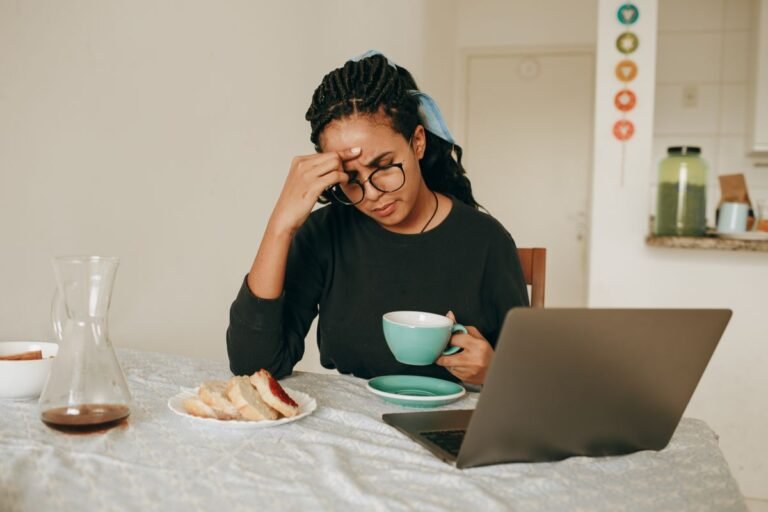
The early signs of perimenopause often show up in your workouts before you connect them to hormones. Recovery takes longer, sleep gets patchy, joints feel stiffer, and weight starts to settle around your middle even when your routine has not changed. Cycle changes usually come alongside. The fix is not training harder: it is lifting regularly, eating more protein, protecting sleep, and adjusting intensity to how you feel.
| What you notice | What may be going on | An early adjustment |
|---|---|---|
| Slower recovery, more soreness | Poorer sleep and age-related muscle loss | Add a rest day between hard sessions for the same muscles |
| Weight shifting to your waist | Lower estrogen moves fat storage toward the abdomen | Strength train twice a week and keep walking |
| Achy, stiff joints | Estrogen decline is linked with joint soreness | Longer warm-ups and low-impact cardio days |
| Flat energy in workouts | Broken sleep, or iron loss from heavier periods | Track energy, and ask about a blood test if it persists |
| Cycle changes | Fluctuating hormones as ovulation becomes irregular | Log your cycle next to your training notes |
When does perimenopause usually start?
Perimenopause is the transition before your final period. According to Cleveland Clinic, it can begin as early as your mid-30s or as late as your mid-50s, and it most often starts in your mid-40s. The average length is about four years, though it can last up to eight.
You reach menopause once you have gone 12 months in a row without a period. Our guide to how long perimenopause lasts walks through the stages in more detail.
The point for your training is simple. These changes can begin years before your periods stop, so it pays to recognize them early and adapt, rather than assuming you are suddenly out of shape.
Why does recovery feel slower in your 40s?
Many women notice that a workout which used to leave them mildly sore now takes two or three days to shake off. Two things are often behind it.
Muscle is harder to hold on to
Mayo Clinic notes that lean muscle mass and strength tend to decline with age. Less muscle means each session asks more of the muscle you have. Strength training is the main way to slow that decline.
Sleep is doing less repair work
Mayo Clinic lists sleep problems as a common perimenopause symptom, often from hot flashes or night sweats, but not always. Harvard Health puts the figure at about 40 percent of perimenopausal women. Short or broken sleep leaves you less recovered for the next session.
How to adjust
- Leave at least one full rest day between hard sessions for the same muscle group, as Mayo Clinic advises.
- Swap one high-intensity session a week for an easy walk or bike ride.
- Keep your hardest workouts for the days after your best sleep, if your schedule allows.
- Lower the weight slightly on a bad-sleep day instead of skipping entirely.
Why is weight shifting to your middle?
This is one of the most common early changes women notice. Your scale weight may barely move, yet your waistband feels tighter.
Mayo Clinic explains that body fat tends to shift to the abdomen around menopause, partly because estrogen affects where fat is stored. Age-related muscle loss also slows how many calories you burn. A waist over 35 inches (89 centimeters) is a sign of excess belly fat and higher health risk.
The response that works best is steady, not drastic:
- At least 150 minutes a week of moderate activity, such as brisk walking, or 75 minutes of vigorous activity.
- Strength training at least twice a week.
- Protein at each meal to help protect muscle.
- Fewer liquid calories, including alcohol.
For the full picture, read why menopause causes belly fat.
Why do your joints ache more during workouts?
New stiffness in your knees, hips or hands can feel like an injury. Often it is not. The Wikipedia overview of menopause lists joint soreness among the symptoms that can worsen around menopause, and links falling estrogen with higher rates of joint pain and osteoarthritis after menopause.
Movement usually helps rather than hurts. Mayo Clinic notes that strength training may reduce joint pain in conditions such as arthritis. A few practical changes make sessions more comfortable:
- Warm up for 8 to 10 minutes, not two. March in place, do bodyweight squats to a chair, and circle your arms and hips.
- Use low-impact cardio on achy days: cycling, swimming, an elliptical or walking on a flat route.
- Shorten the range of motion on squats or lunges until the joint settles.
- Keep moving between sessions with short walks or gentle stretching on rest days.
See a doctor if a joint is swollen, hot or red, if pain wakes you at night, or if it follows a fall or twist. Those signs need a proper look.
Why is your energy so flat in workouts?
Low energy is frustrating because it has many possible causes. Poor sleep is a common one. Another is easy to miss: heavier periods.
Many women notice heavier or longer bleeding in perimenopause. MedlinePlus lists heavy, long or frequent periods as a cause of iron deficiency anemia. Early symptoms include feeling weak or tired more than usual, especially with exercise, along with headaches and trouble concentrating. Shortness of breath can follow as it worsens.
A simple blood test can check this. MedlinePlus notes that doctors use a complete blood count along with iron tests such as serum ferritin. Ask for testing before you start an iron supplement, so you know whether low iron is really the issue.
Our article on why you are so tired during perimenopause covers the other common causes.
What cycle changes are worth noting?
Cycle changes are usually the first clear sign. Mayo Clinic says that if the length of your cycle is consistently different by seven days or more, you may be in early perimenopause. Sixty days or more between periods suggests late perimenopause.
Write your cycle dates in the same place as your workouts. Over two or three months, patterns often appear. One woman might find that her strength dips and her sleep is worse in the few days before a period, and that her best lifting days come in the week after it ends. Knowing that lets her plan heavier sessions for good weeks and lighter ones for rough weeks.
When should bleeding changes be checked?
Mayo Clinic advises seeing a clinician if you have:
- Very heavy bleeding
- Bleeding that lasts longer than seven days
- Bleeding between periods
- Periods that regularly come less than 21 days apart
Bleeding after 12 months without a period should be checked right away.
How should you change your training and eating early on?
You do not need a completely new routine. Small, early adjustments pay off over the next decade.
Make strength training non-negotiable
Mayo Clinic recommends strength training for all major muscle groups at least twice a week. Sessions of 20 to 30 minutes are enough to see progress. Use a weight that tires your muscles in about 12 to 15 reps, and increase it gradually as it gets easy. Strength work also protects bone, which matters because Mayo Clinic notes bone loss speeds up as estrogen falls. Our beginner strength plan for women over 45 gives you a simple three-day start.
Add weight-bearing cardio
Cleveland Clinic suggests weight-bearing exercise such as walking, hiking or strength training during perimenopause. Brisk walking counts toward your weekly 150 minutes and is easy on joints.
Build meals around protein and plants
Cleveland Clinic recommends plenty of fruits, vegetables, whole grains, lean protein and healthy fats. A practical rule is a palm-sized portion of protein at each meal, such as eggs, Greek yogurt, fish, chicken, tofu or beans. Our guide to protein after 45 explains how much to aim for.
Cut back on alcohol and late caffeine
Cleveland Clinic lists limiting alcohol and caffeine among its lifestyle suggestions for perimenopause. Both can disturb sleep, and sleep drives recovery.
Could these changes be something other than perimenopause?
Yes. Tiredness, weight change and aches overlap with several other conditions, including an underactive thyroid, anemia and depression. Cleveland Clinic notes that hormone testing is not usually needed to diagnose perimenopause, but your doctor may order tests to rule out other causes.
Ask for a check if symptoms are severe, change quickly, or do not fit the usual pattern. Our article on telling perimenopause and thyroid problems apart covers the most common mix-up.
How does exercise help during the menopause transition?
Stanford Medicine explains why exercise matters during the menopause transition and how it can make the years ahead easier.
What helps you track and train through early perimenopause?
These support the steps above: logging your cycle and workouts, strength training at home, and understanding the changes. Our picks:
- Clever Fox Fitness Journal: A structured workout log with room to note sleep, energy and cycle days next to your sets and reps. Check price on Amazon
- Fit Simplify Resistance Loop Bands: A set of light to heavy bands for warm-ups and joint-friendly strength work on achy days. Check price on Amazon
- Next Level by Stacy Sims, PhD: An exercise physiologist’s guide to training and fueling through perimenopause and beyond. Check price on Amazon
- The New Perimenopause by Mary Claire Haver, MD: A clear guide to the years before your final period, when early symptoms are easy to dismiss. Check price on Amazon
Frequently asked questions
Can perimenopause make workouts feel harder?
Yes, for many women. Poorer sleep, age-related muscle loss and sometimes low iron from heavier periods can all make familiar workouts feel tougher. Adjusting intensity and adding recovery time usually helps.
Should I stop high-intensity workouts in perimenopause?
Not necessarily. Many women do well with one or two hard sessions a week, balanced with strength training, walking and rest days. Scale back if you feel run down or are not recovering between sessions.
Why am I gaining belly fat when I have not changed anything?
Lower estrogen shifts fat storage toward the abdomen, and muscle loss slows the calories you burn. Strength training, regular activity and enough protein are the most practical responses.
Is joint pain a sign of perimenopause?
It can be. Joint soreness is linked with falling estrogen. See a doctor if a joint is swollen, hot or red, or if pain follows an injury.
What should I track in early perimenopause?
Log your cycle dates, sleep, energy and workouts in one place for two to three months. Patterns become much clearer, and the record is useful at a doctor visit.
Sources and further reading
- Perimenopause: Symptoms and causes, Mayo Clinic
- Belly fat in women: Taking and keeping it off, Mayo Clinic
- Strength training: Get stronger, leaner, healthier, Mayo Clinic
- Perimenopause: Age, Stages, Signs, Symptoms and Treatment, Cleveland Clinic
- Perimenopause: Rocky road to menopause, Harvard Health Publishing
- Iron deficiency anemia, MedlinePlus
- Menopause, Wikipedia
A quick note: this is general health and fitness information, not medical advice. Talk with your doctor before starting a new exercise program or changing any treatment.