30-Day Walking Challenge for Beginners Over 45
This article contains affiliate links. As an Amazon Associate, we earn from qualifying purchases, at no extra cost to you. Learn more.
A 30-day walking challenge for beginners over 45 starts with 10 easy minutes on five days a week and builds to 30 brisk minutes on five days by week four. That last week reaches the 150 weekly minutes of moderate activity the CDC recommends for adults. Add two short strength sessions, walk at a pace where you can talk but not sing, and keep one rest day.
| Week | Walk length | Days | Weekly total | Focus |
|---|---|---|---|---|
| 1 | 10 minutes | 5 | 50 minutes | Comfortable pace, build the habit |
| 2 | 15 minutes | 5 | 75 minutes | Add short brisk stretches |
| 3 | 20 to 25 minutes | 5 | 100 to 125 minutes | Mostly brisk, one longer walk |
| 4 | 30 minutes | 5 | 150 minutes | Brisk pace, CDC target reached |
Why is walking a good place to start after 45?
Walking needs no gym, no special skill and very little gear. It is low-impact, which makes it gentler on joints than running. Mayo Clinic notes that regular brisk walking can help you maintain a healthy weight, prevent or manage conditions such as heart disease and type 2 diabetes, strengthen bones and muscles, and lift your mood. In older adults it can also lower the risk of falls.
Midlife is a good time to build the habit. Muscle and bone tend to decline with age, and regular activity helps you hold on to both. A daily walk will not do everything alone, but it is one of the easiest healthy habits to start and keep. If you have been worried about your knees, our guide to running and knees after 50 explains why low-impact options are a good fit.
How much walking do you actually need?
The CDC recommends that adults get at least 150 minutes of moderate activity a week, such as brisk walking, plus muscle strengthening on at least 2 days. You can split the 150 minutes however you like. Thirty minutes on five days is the most common way, and shorter bouts count too.
What about 10,000 steps? That number is not a scientific threshold. A 2022 analysis of 15 studies with more than 47,000 adults found that more daily steps were linked to a lower risk of death. The benefit leveled off at about 6,000 to 8,000 steps a day for adults 60 and older, and about 8,000 to 10,000 for younger adults. People in the highest step group had roughly 40 to 53 percent lower risk than those in the lowest. For more on steps, see our 8,000 step reset, and for the bigger picture, read how much exercise women over 50 need.
What is brisk walking, and how do you know you are doing it?
The NHS describes brisk walking as about 3 miles per hour, faster than a stroll. A simple check: you can still talk, but you cannot sing the words to a song. For comparison, average walking speeds for older adults are roughly 2.8 to 2.95 miles per hour.
Good form makes brisk walking feel easier and safer. Mayo Clinic suggests that you:
- Keep your head up and look forward, not at the ground.
- Relax your neck, shoulders and back.
- Swing your arms freely, with a slight bend at the elbows.
- Tighten your stomach muscles a little and keep your back straight.
- Walk smoothly, rolling your foot from heel to toe.
What does the 30-day plan look like day by day?
Each week below has five walking days, one strength or stretch day and one full rest day. Swap days around to fit your schedule. Start every walk with a few minutes at an easy pace and end with a few minutes of slower walking, as Mayo Clinic advises for warming up and cooling down.
Week 1: build the habit (days 1 to 7)
- Days 1, 2, 4, 5 and 6: walk 10 minutes at a comfortable pace. The goal is simply to show up.
- Day 3: 10 minutes of gentle stretching or a short strength routine.
- Day 7: rest.
Pick a set time, such as right after breakfast, and treat it like an appointment. The NHS suggests building walking into your daily routine, for example walking to the shops, taking the stairs or going for a stroll after dinner.

Week 2: add brisk stretches (days 8 to 14)
- Walking days: 15 minutes. After the warm-up, walk briskly for 1 minute, then easy for 2 minutes. Repeat.
- Day 10: strength session, such as sit-to-stands, wall push-ups and calf raises.
- Day 14: rest.
Mayo Clinic suggests this kind of interval walking, fast for a few minutes and then slower, as a way to build fitness, and adding a few minutes each week as you improve.
Week 3: mostly brisk (days 15 to 21)
- Four walking days: 20 minutes, mostly at a brisk pace.
- One longer walk: 25 minutes, on a route you enjoy, such as a park or a trail.
- Day 17: strength session.
- Day 21: rest.
Week 4: reach 150 minutes (days 22 to 30)
- Five walking days: 30 minutes at a brisk pace.
- Two strength days: 15 to 20 minutes each.
- Days 29 and 30: repeat your favorite walk and note how much easier it feels than on day 1.
Thirty minutes not possible in one go? Split it into three 10-minute walks. The CDC counts shorter bouts toward the weekly total.
What should you add besides walking?
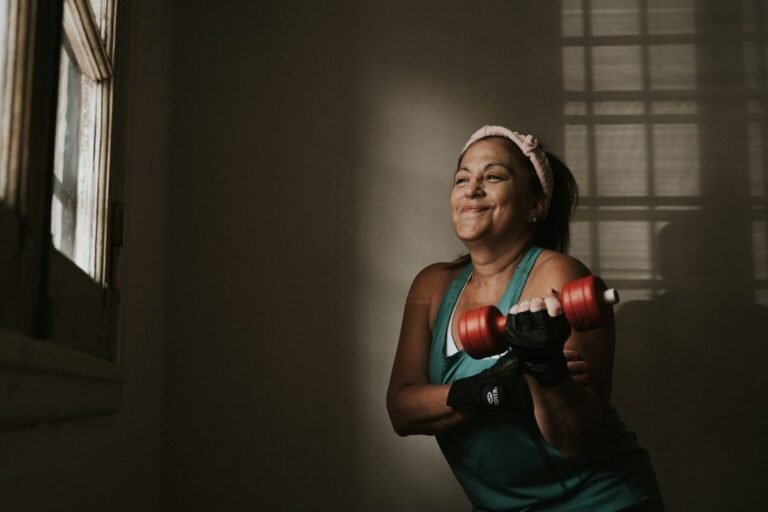
Walking covers the aerobic part of the guidelines. The CDC also recommends muscle strengthening at least 2 days a week. Strength work helps protect your bones, joints and balance as you age. Two short sessions with your body weight or light dumbbells are enough to start. Our beginner strength training plan fits neatly into the challenge, and cardio or strength training after 50 explains why you need both.
How do you stay motivated for 30 days?
- Track it. Mayo Clinic suggests an activity tracker, app or pedometer, or a simple walking journal. Seeing your minutes add up is motivating.
- Find a walking partner. A friend or neighbor makes you more likely to show up.
- Change the route. A new park or neighborhood keeps walks interesting.
- Listen to something. A podcast or audiobook makes the time pass quickly. Keep the volume low enough to hear traffic.
- Plan for bad weather. Walk in a mall, a big store or at home in place.
- Do not aim for perfect. Missed a day? Pick up where you left off rather than starting over.
What does this look like in practice?
Picture a 52-year-old who works at a desk all day and has not exercised regularly in years. In week one she walks around the block after dinner, which takes about 10 minutes. By week two her neighbor joins her, and they add a short brisk stretch at the hill. In week four they walk 30 minutes most evenings and she does a short strength routine on Saturday and Tuesday mornings. The walk no longer feels like a chore. It feels like the part of the day she looks forward to.
What gear and safety steps do you need?
- Supportive shoes: the NHS says any comfortable shoes that give adequate support and do not cause blisters will do. Our guide to walking shoes after 50 explains what to look for.
- Water: carry a bottle on longer or warmer walks.
- Visibility: wear bright or reflective clothing if you walk at dawn or dusk.
- Weather: dress in layers you can remove as you warm up.
- Your body: stop and get medical help if you have chest pain, severe shortness of breath or dizziness.
Talk to your doctor before starting if you have heart disease, diabetes, joint problems or have been very inactive. Mild muscle soreness in the first week is normal. Sharp or lasting joint pain is not.
Want to see why brisk walking helps women’s hearts?
This short Mayo Clinic Minute explains how brisk walking supports heart health in women.
What are our top picks for a walking challenge?
You do not need much to start walking, but these four make the challenge more comfortable, easier to track and safer. Our picks:
- Skechers GO WALK Women’s Walking Shoes: Lightweight, cushioned walking shoes that slip on easily for daily walks. Check price on Amazon
- Fitbit Inspire 3: A slim tracker that counts steps and active minutes so you can see your weekly total grow. Check price on Amazon
- Owala FreeSip Insulated Water Bottle: An insulated bottle that keeps water cold on longer or warmer walks. Check price on Amazon
- LED Reflective Safety Vest: A light, reflective vest that helps drivers see you on early morning or evening walks. Check price on Amazon
Frequently asked questions
Is walking 30 minutes a day enough exercise after 45?
Thirty minutes of brisk walking on five days meets the CDC aerobic target of 150 minutes a week. Add muscle strengthening on 2 days to meet the full guidelines.
Do I need to walk 10,000 steps a day?
No. Research suggests the benefit levels off at about 6,000 to 8,000 steps for adults over 60 and 8,000 to 10,000 for younger adults. Any increase from where you are now helps.
Can walking help with weight loss after 45?
Walking burns calories and helps you maintain a healthy weight, especially alongside strength training and balanced eating. Results vary from person to person.
What if I miss a day of the challenge?
Simply carry on with the next day. Consistency over the month matters far more than a perfect streak.
Should I walk every day?
Most people can walk daily at an easy pace. In this plan, one rest day and two strength days give your body time to recover and build strength.
Sources and further reading
- Walking: Trim your waistline, improve your health, Mayo Clinic
- Adult Activity: An Overview, Centers for Disease Control and Prevention
- Daily steps and all-cause mortality: a meta-analysis of 15 international cohorts, The Lancet Public Health, via PubMed Central
- Walking for health, NHS
- Walking, Wikipedia
A quick note: this is general health and fitness information, not medical advice. Talk with your doctor before starting a new exercise program or changing any treatment.