
How Much Exercise Do Women Over 50 Need Each Week?
This article contains affiliate links. As an Amazon Associate, we earn from qualifying purchases, at no extra cost to you. Learn more.
Women over 50 need at least 150 minutes of moderate aerobic activity a week, such as brisk walking, plus muscle-strengthening exercise on at least 2 days, according to the CDC. That is about 30 minutes on five days, plus two short strength sessions. After 65, balance work is added. Going toward 300 minutes brings extra benefits, but any amount of movement is better than none.
| Type | How much | Examples |
|---|---|---|
| Moderate aerobic | 150 to 300 minutes a week | Brisk walking, cycling, water aerobics, dancing |
| Or vigorous aerobic | 75 to 150 minutes a week | Jogging, swimming laps, hill hiking, aerobic dance |
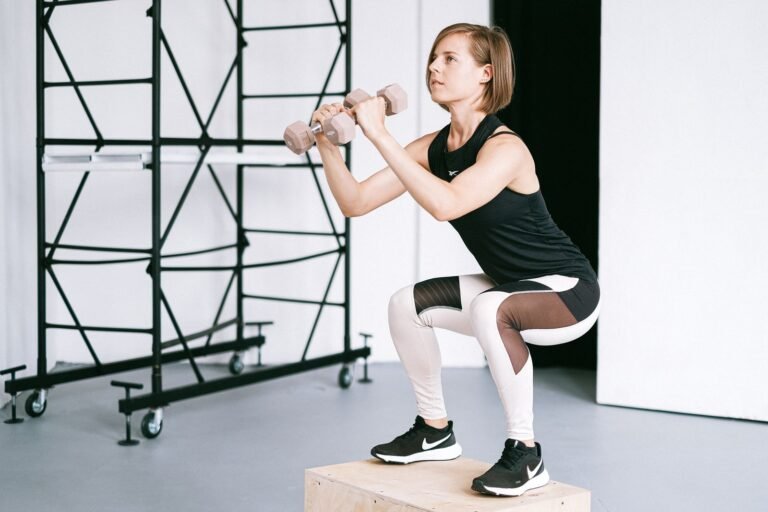
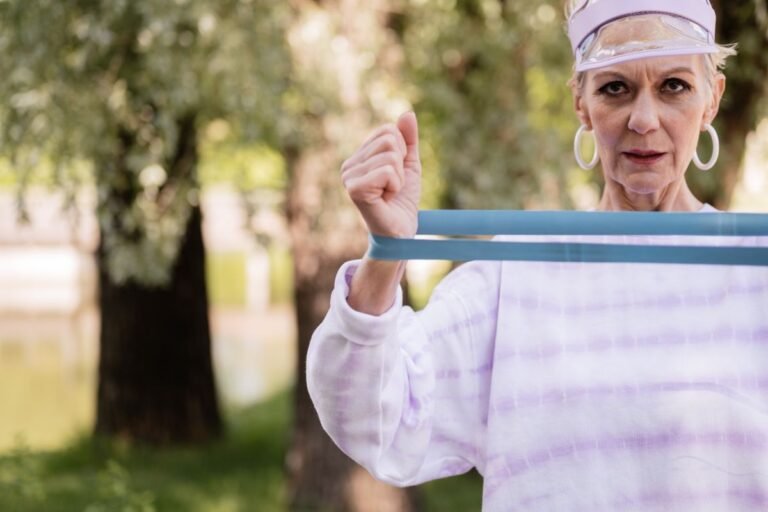
| Muscle-strengthening | 2 or more days a week | Dumbbells, bands, bodyweight squats and push-ups |
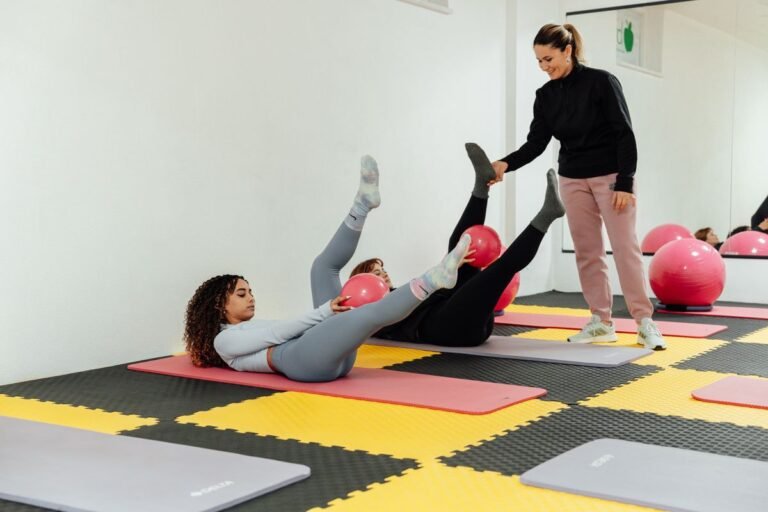
| Balance (especially 65 and older) | Most weeks | Heel-to-toe walking, standing up from a chair, single-leg stands |
| Sitting less | Every day | Short walks, standing breaks, light chores |
What do the official exercise guidelines say?
In the United States, the advice comes from the Physical Activity Guidelines for Americans, published by the Department of Health and Human Services. The second edition, released in 2018, recommends 150 to 300 minutes a week of moderate activity, or 75 to 150 minutes of vigorous activity, plus muscle strengthening on at least 2 days.
The CDC turns that into simple targets. For adults, it’s at least 150 minutes of moderate activity a week and at least 2 days of muscle-strengthening activity (CDC). For adults 65 and older, the CDC adds balance activities such as walking heel-to-toe or standing up from a seated position (CDC).
Mayo Clinic adds that strength sessions can be simple: one set of each exercise, with a weight heavy enough to tire your muscles after about 12 to 15 repetitions (Mayo Clinic).
What counts as moderate or vigorous activity?
Intensity is about effort, not a specific activity. The NHS offers an easy check called the talk test (NHS):
- Moderate: your heart rate rises, you breathe faster and feel warmer, and you can still talk but not sing. Examples include brisk walking, water aerobics, cycling, dancing and pushing a lawn mower.
- Vigorous: you breathe hard and fast and can only say a few words without pausing for breath. Examples include running, swimming laps and fast cycling.
- Light: moving rather than sitting, such as slow walking, making the bed or vacuuming. It doesn’t count toward the 150 minutes, but it still beats sitting.
As a rule of thumb, one minute of vigorous activity counts about the same as two minutes of moderate activity. The NHS notes that 75 minutes of vigorous activity can give similar benefits to 150 minutes of moderate. So a 20-minute jog and a 40-minute brisk walk land in roughly the same place.
How should you split up 150 minutes?
However works for your life. The 2018 guidelines dropped the old rule that activity only counted in bouts of at least 10 minutes, so short stretches add up too. Mayo Clinic suggests that several five-minute walks can stand in for one longer walk.
- The classic: 30 minutes on 5 days.
- The weekend-heavy: 50 minutes on 3 days.
- The busy-day version: three 10-minute walks after meals on 5 days.
- The mixed approach: a 60-minute weekend hike plus 20 to 30 minutes on three weekdays.
What does a sample week look like?
| Day | Activity | Minutes |
|---|---|---|
| Monday | Brisk walk | 30 aerobic |
| Tuesday | Full-body strength session | 25 strength |
| Wednesday | Walk or bike ride | 30 aerobic |
| Thursday | Rest, stretching or balance practice | 10 balance |
| Friday | Strength session plus a short walk | 25 strength, 15 aerobic |
| Saturday | Longer walk, hike or swim | 45 aerobic |
| Sunday | Easy stroll or rest | 30 light or aerobic |
That adds up to about 150 minutes of aerobic activity, two strength days and some balance work.

What if you can’t reach 150 minutes yet?
Start where you are. The CDC’s advice for older adults is clear: if you have trouble meeting the recommendations, be as active as your abilities and conditions allow, and remember that some physical activity is better than none.
The research backs this up. A meta-analysis of 15 studies with more than 47,000 adults found that the risk of dying during follow-up fell steadily as daily steps rose. For adults 60 and older, the benefit kept growing up to about 6,000 to 8,000 steps a day. Even the second-lowest group, at about 5,800 steps, had a clearly lower risk than the least active group. These are observational findings, so they show a strong link rather than proof, but the message is that small increases count.
A gradual build-up
One woman, 57, works at a desk and walks about 15 minutes a day. She adds a 10-minute walk after lunch, so she’s at 25 minutes on weekdays. Two weeks later she makes her weekend walks 40 minutes. By week six she’s at about 165 minutes a week and adds two 20-minute strength sessions using bands. She didn’t get there in one leap, and that’s why it stuck.
If you’re starting from scratch, read is it too late to start exercising at 50 for a gentle first two months, or try our 30-day walking challenge for beginners.
Why is strength training part of the recommendation?
Walking is excellent for your heart, but it does little for the muscle loss that speeds up in midlife. Strength training protects muscle and bone, which supports balance, metabolism and independence as you age. That’s why it’s in the guidelines as its own line, not an optional extra.
Two sessions of 20 to 30 minutes are enough to start. Work your legs, hips, back, chest, shoulders, arms and core. Our beginner strength plan for women over 45 lays out the moves, and cardio or strength training after 50 explains how the two fit together.
Is more exercise always better?
Up to a point. Mayo Clinic notes that the guidelines suggest 300 minutes or more of moderate activity a week for greater health benefits, and that this much may help with weight loss or keeping weight off. But for most women over 50, the biggest gains come from going from little or no activity to meeting the basics consistently.
A few signs you’re overdoing it:
- Soreness that lasts more than a few days or keeps building.
- Feeling more tired, not more energetic, after a few weeks.
- Poor sleep, low mood or nagging joint pain.
- Your resting heart rate creeping up on most mornings.
Add rest days, swap a hard session for an easy walk, and increase only one thing at a time: minutes, intensity or weight.
When should you check with a doctor?
Talk with your doctor before raising your activity a lot if you have heart disease, diabetes, uncontrolled blood pressure, lung disease, osteoporosis with past fractures, or recent surgery. Stop and get help right away if you feel chest pain or pressure, unusual shortness of breath, dizziness, or a racing or irregular heartbeat.
What does Mayo Clinic say about how much exercise you need?
In this Mayo Clinic Minute, a Mayo Clinic expert walks through the weekly targets and how to reach them.
For a walking-focused way to hit your minutes, see the 8,000-step reset.
What helps you get your weekly exercise in?
A tracker shows whether you’re reaching your minutes, and a few simple tools cover both cardio and strength at home. Our picks:
- Fitbit Inspire 3: A slim tracker that counts steps and active minutes, so you can see how close you are to 150 minutes a week. Check price on Amazon
- Skechers GO WALK Women’s Walking Shoes: Lightweight, cushioned slip-ons that make daily brisk walks more comfortable. Check price on Amazon
- Amazon Basics Neoprene Dumbbell Set: Several light, color-coded pairs on a stand, enough for your two weekly strength sessions at home. Check price on Amazon
- Gaiam Essentials Thick Yoga Mat: A cushioned spot for floor exercises, stretching and balance practice on rest days. Check price on Amazon
Frequently asked questions
How many minutes a day should a woman over 50 exercise?
About 30 minutes of moderate activity on five days a week meets the 150-minute guideline. Add two strength sessions a week, and some balance work as you get older.
Does walking count as exercise for women over 50?
Yes. Brisk walking is moderate activity and counts fully toward the 150 minutes. If you can talk but not sing, you’re walking briskly enough.
How often should women over 50 lift weights?
At least two days a week, working all major muscle groups. One set of 12 to 15 reps per exercise, at a weight that tires your muscles, is enough to start.
Do short walks count toward the 150 minutes?
Yes. The current guidelines count activity of any length, so several short walks in a day add up just like one longer session.
Do household chores count as exercise?
Light chores like dusting don’t count toward the 150 minutes, but they beat sitting. Harder jobs like mowing or heavy gardening that make you breathe faster can count as moderate activity.
Sources and further reading
- Adult Activity: An Overview, Centers for Disease Control and Prevention
- Older Adult Activity: An Overview, Centers for Disease Control and Prevention
- Exercise: How much do I need every day?, Mayo Clinic
- Physical activity guidelines for older adults, NHS
- Daily steps and all-cause mortality: a meta-analysis of 15 international cohorts, PubMed Central
- Physical Activity Guidelines for Americans, Wikipedia
A quick note: this is general health and fitness information, not medical advice. Talk with your doctor before starting a new exercise program or changing any treatment.



6 Comments